🚚 Free U.S. shipping over $150 · 24–48 hours U.S dispatch · For Research Use Only · Made in USA
🚚 Free U.S. shipping over $150 · 24–48 hours U.S dispatch · For Research Use Only · Made in USA
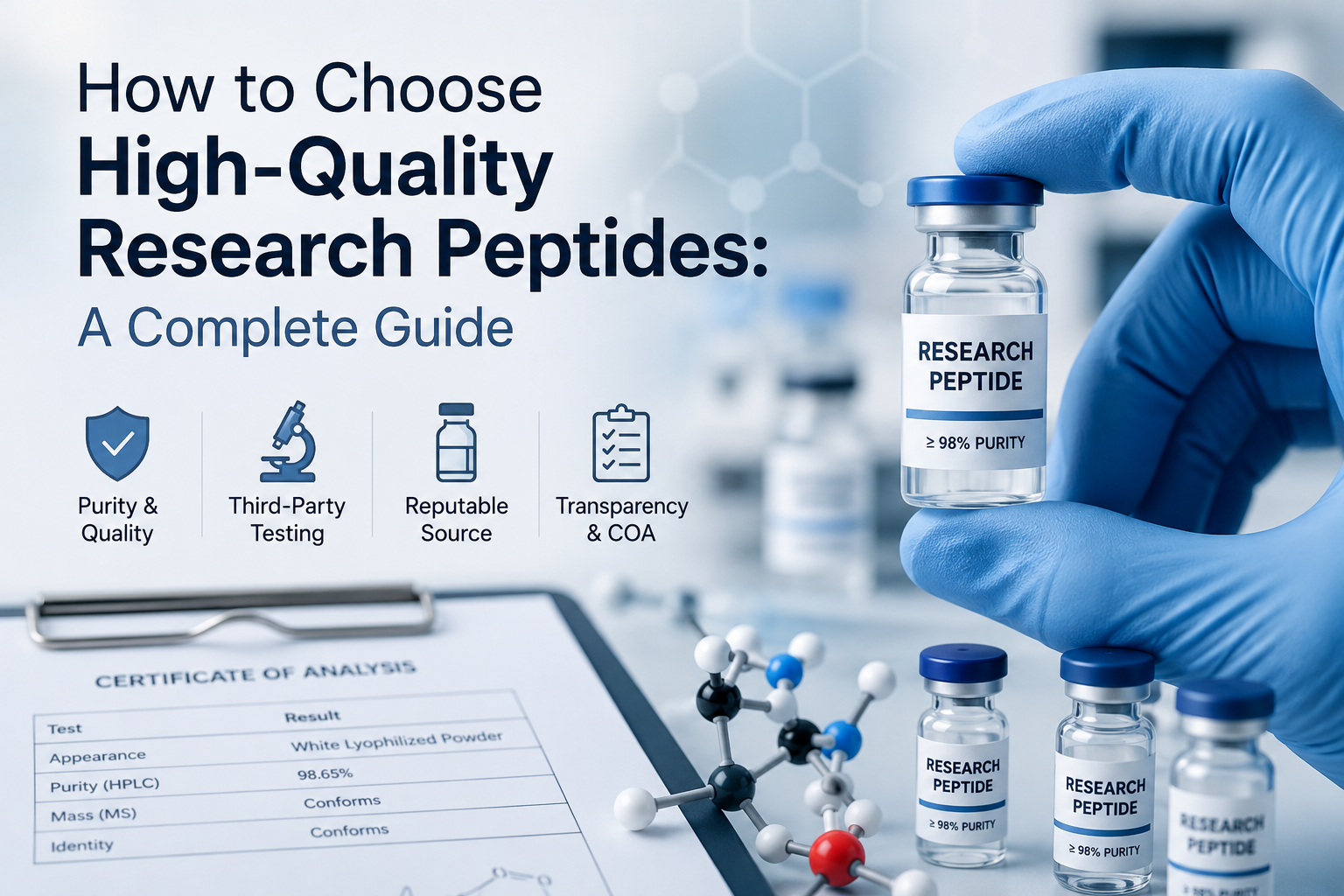
When working with research peptides, choosing a reliable compound is only one part of the process. Researchers also need to consider purity, identity verification, documentation, consistency, and proper handling.
With the growing number of peptide suppliers available online, it can be difficult to determine which products are appropriate for laboratory and research applications. A professional approach starts with looking beyond the product name and price and examining the quality information behind each compound.
In this guide, we’ll explain the most important factors to consider when evaluating research peptides and how to make a more informed choice when exploring a research peptide catalog such as Primal Genix.
Research Use Only: Research peptides and related compounds should be used exclusively for laboratory and scientific research purposes. They are not intended for human or veterinary consumption, diagnosis, treatment, or prevention of disease.
A high-quality research peptide should be supported by clear information about its identity, purity, manufacturing or sourcing process, batch information, and analytical testing.
Rather than relying only on marketing claims, researchers should look for measurable documentation that helps establish what is actually present in a product.
Several factors deserve particular attention:
The goal is simple: the more information available about a research compound, the easier it is to evaluate its suitability for a particular laboratory application.
Before considering purity, researchers should confirm that the compound being supplied is actually the compound described on the label.
Identity testing helps distinguish the intended peptide from unrelated compounds or impurities.
Depending on the laboratory and analytical method, techniques such as mass spectrometry may be used to examine molecular identity and molecular mass.
For researchers, this information is particularly valuable because an incorrectly identified compound can compromise an entire experiment.
Imagine designing an experiment around a specific peptide sequence and then discovering that the material does not match the expected compound. Even if the sample appears visually normal, the resulting research data may become difficult to interpret.
That is why identity verification should be considered alongside purity rather than treated as an optional feature.
Purity is one of the most commonly discussed quality indicators for research peptides.
Analytical methods such as HPLC can be used to evaluate the composition of a peptide sample and identify the proportion associated with the target compound.
However, a reported purity percentage should not be viewed in isolation.
A stronger evaluation considers:
Purity + Identity + Documentation + Batch Information
Together, these provide a much more useful picture of a research material than a single percentage displayed on a product page.
When comparing products from different suppliers, look for transparent analytical information rather than relying exclusively on phrases such as “premium,” “ultra-pure,” or “research grade.”
A Certificate of Analysis, commonly called a COA, is one of the most useful documents for evaluating a research compound.
A COA can provide information about a particular batch and may include analytical results such as:
The exact information included depends on the supplier and testing laboratory.
Research materials can vary between production batches. A general statement about a company’s products does not necessarily tell you what was found in a particular lot.
Batch-specific documentation provides a stronger connection between the material being supplied and the analytical results reported for it.
For researchers purchasing from Primal Genix, reviewing available product and testing documentation should be an important part of the evaluation process.
Price is an important consideration for research budgets, but it should not be the only deciding factor.
A lower-priced compound may appear attractive initially, but researchers should also consider:
Research reproducibility has value.
If inconsistent or poorly documented materials lead to unreliable experimental results, the apparent savings can quickly become insignificant compared with the time and resources invested in the research.
Consistency becomes increasingly important when research involves multiple experiments or repeated studies.
Researchers may need to compare results from different batches or repeat an experiment over an extended period. In these situations, consistent sourcing and clear batch information can make experimental comparisons easier.
A useful research supplier should therefore provide sufficient product information to help researchers understand what they are purchasing and maintain appropriate records.
For a growing research program, documentation and traceability can be just as important as the initial purchase.
Peptides are sensitive research materials, and their stability can depend on factors such as temperature, moisture, light exposure, formulation, and handling conditions.
Before ordering a research peptide, researchers should review the supplier’s available storage and handling information.
Depending on the specific compound, considerations may include:
Following documented storage recommendations can help researchers maintain the integrity of their materials throughout an experiment.
A professional research peptide supplier should clearly communicate the intended use of its products.
Research compounds are not the same as approved medicines or dietary supplements. Their role is within scientific and laboratory research environments.
Clear labeling helps prevent confusion and establishes appropriate expectations for customers.
At Primal Genix, research-focused product information should make it straightforward for researchers to understand that the catalog is intended for scientific and laboratory applications.
The research peptide market contains a wide range of suppliers, products, and documentation standards.
Two websites may list the same compound while providing very different levels of information.
For example:
| Quality Factor | What to Look For |
|---|---|
| Identity | Clear compound identification |
| Purity | Analytical purity information |
| Testing | Appropriate analytical methods |
| COA | Batch-specific documentation |
| Traceability | Lot or batch information |
| Labeling | Clear research-use designation |
| Storage | Appropriate handling guidance |
| Transparency | Accessible product information |
Using a checklist like this can make supplier comparison much more objective.
At Primal Genix, researchers can explore a range of research-focused peptide products through a dedicated catalog.
Instead of selecting a compound based solely on a product name, researchers can evaluate the information surrounding the material and determine whether it fits their experimental requirements.
Whether you are conducting peptide-related laboratory research, investigating molecular pathways, or building an experimental research program, having access to clearly presented product information can make the sourcing process more straightforward.
When evaluating research materials, researchers generally want three things:
Clarity.
You should know what compound you are evaluating and what information is available about it.
Documentation.
Analytical and batch information can help support informed research decisions.
Convenience.
A well-organized catalog makes it easier to compare compounds and identify materials relevant to your research.
Explore the Primal Genix research peptide catalog to discover available compounds and review the information provided for each product.
Before purchasing a research peptide, ask these questions:
Make sure the product name and compound information are clearly presented.
Look for analytical data rather than relying only on marketing language.
Prefer batch-specific documentation where available.
Lot or batch information can improve traceability.
Research-use labeling should be unambiguous.
Check that appropriate handling information is available.
A professional supplier should make relevant product information easy to understand.
Choosing high-quality research peptides requires more than comparing product names and prices.
The strongest approach is to evaluate the identity, purity, testing, documentation, traceability, and handling information associated with each research compound.
For researchers, these details can make the sourcing process more transparent and help support better-organized laboratory work.
As you explore research peptides, take the time to examine the available documentation and choose products based on evidence and transparency rather than marketing claims alone.
Explore the Primal Genix research peptide catalog and find the compounds relevant to your next research project.
Important: All products discussed are intended strictly for laboratory research and scientific evaluation. They are not intended for human or veterinary consumption, diagnosis, treatment, or prevention of disease.
No account yet?
Create an Account